
Can Unbalanced Tires Cause Noise? What Different Sounds Mean
Can Unbalanced Tires Cause Noise? What Different Sounds Mean
A quiet drive can turn into a frustrating experience when your tires suddenly start humming, thumping, or making a strange rumbling sound. You might notice a noise that becomes louder as you accelerate or feel a vibration through the steering wheel. While road conditions and tire wear can cause these changes, an imbalance in your wheels may also be responsible.
Unbalanced tires do more than make your ride uncomfortable. When a tire's weight is not distributed evenly around the wheel, you might get very noticeable vibrations while the wheel is being rotated. These vibrations may become more noticeable at higher speeds and can contribute to uneven tire wear over time. Understanding the sounds your tires make can help you identify when your vehicle needs attention.
A study published in Sensors found that a wheel-imbalance detection system achieved nearly 100% accuracy at speeds of 50–70 km/h, compared with around 50% at 90 km/h under the study's test conditions. Therefore, these results emphasize the role that vibration plays in the detection of wheel imbalance. But how can you tell whether unusual tire noise is caused by an imbalance? Understanding what different sounds mean can help you identify the possible cause.
Why Unbalanced Tires Can Make Noise
Unbalanced tires can be a source of disturbances in your car, but more particularly, at higher speeds. When weight is improperly distributed in the wheel and tire assembly, it can create vibrations that may lead to humming or thumping sounds. Other signs your tires may be unbalanced include steering wheel shaking and vibrations in the seat or floor.
Tires can become unbalanced after installation, losing a wheel weight, or hitting a pothole. However, tire damage, uneven tread wear, and worn wheel bearings can cause similar noises. If you notice unusual sounds or vibrations, have your tires inspected to determine whether wheel balancing is needed.
What Different Tire Sounds Mean
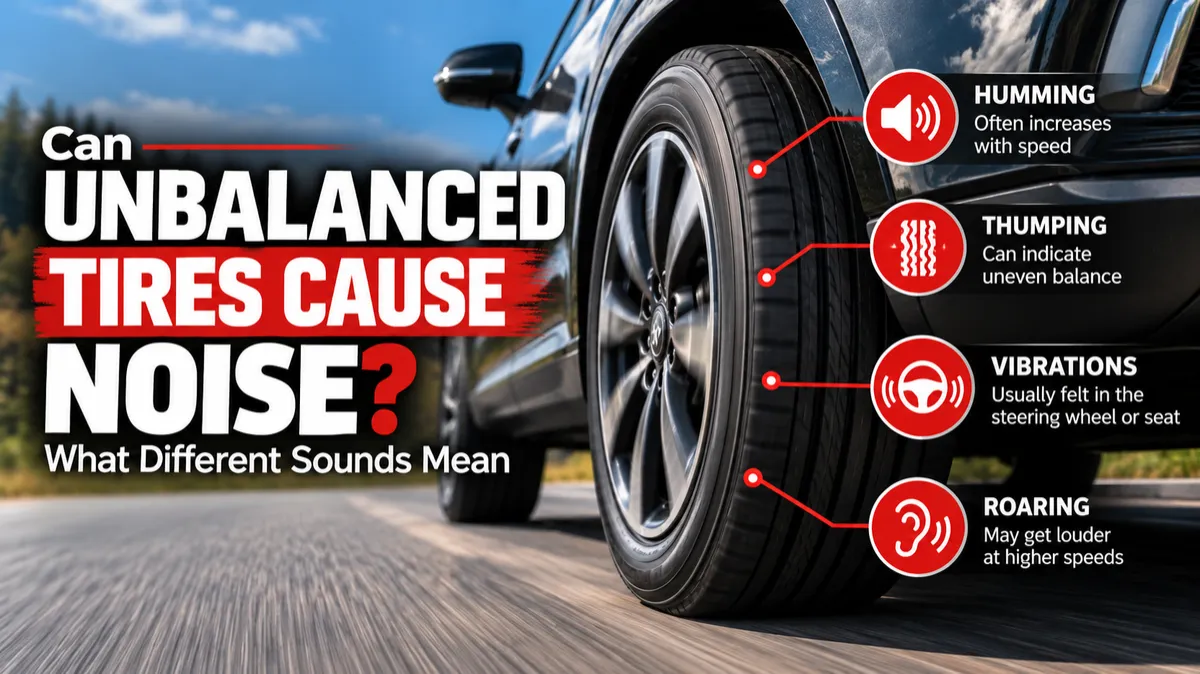
The type of noise you hear can provide useful clues about your vehicle's condition. Pay attention to when the sound starts, whether it changes with speed, and whether you notice any vibration alongside it. Take a look at what different tire sounds may indicate and when they need attention.
1. Humming or Whirring
A steady humming or whirring sound may indicate uneven tire wear, although wheel imbalance can contribute to vibration and noise. The sound becomes louder as you drive faster, especially on the highways.
Tire tread patterns and road surfaces also affect how much noise tires produce. However, if a new humming sound develops or becomes progressively louder, it is worth having the tires checked.
A worn wheel bearing can also create a similar hum. If the sound changes when you turn or seems to come from one corner of the vehicle, ask a technician to inspect the wheel bearings as well.
2. Rhythmic Thumping or Bumping
A repeated thumping sound can occur when an imbalanced wheel creates vibrations during rotation. The noise may seem to follow a regular pattern and it may become more prominent at higher speeds.
However, thumping can also indicate a flat spot, uneven tread wear, or a damaged tire. If your tires were recently replaced, improper installation or balancing may also contribute to vibrations. Understanding the tire installation process can help you know what to expect when having new tires fitted.
In case the thumping is all of sudden, or accompanied by strong vibrations, pull over safely and arrange an inspection before continuing your journey.
3. Grinding or Growling
Grinding or growling sounds should not be ignored. Although tire wear can contribute to road noise, a grinding sound may point to a worn wheel bearing or another mechanical problem.
Compared to a normal tire imbalance, a damaged bearing may produce a persistent growl that changes with speed or when turning. It is still possible to hear the noise when the tires have been balanced.
Because wheel bearings help the wheels rotate safely, prompt professional inspection is important when you hear grinding or notice other handling changes.
4. Clicking or Ticking
If your wheel makes a clicking or ticking sound that repeats as the wheel turns, it may be caused by a small stone, nail, or other object lodged in the tire tread. Loose wheel components or certain mechanical problems can also create clicking noises.
An imbalance is not usually the first explanation for a distinct clicking sound. Inspect the tread for visible objects without removing anything embedded in the tire. If the sound continues, have the tire and wheel assembly checked.
5. Squealing or Scrubbing
Squealing sounds, especially when turning, may indicate incorrect tire pressure, alignment issues, or tires losing grip. Aggressive cornering can also cause tire squeal.
Wheel imbalance can also be a possible cause of noises in the tire area. If your vehicle pulls to one side or the tread shows uneven wear, a technician should check the wheel alignment and tire condition.
Tire balancing is worth checking if you also notice vibrations while driving. If needed, you can review the cost of wheel balancing to understand the potential expense.
How to Tell If Tire Noise Comes From an Imbalance
Noise alone cannot confirm that your tires are unbalanced. Look for other symptoms that may help narrow down the cause.
Steering wheel vibration: You may feel shaking through the steering wheel, specifically at highway driving speeds.
Seat or floor vibration: Vibrations felt throughout the cabin may indicate an issue with the rear wheels or another rotating component.
Noise that changes with speed: An imbalance often becomes more noticeable as wheel rotation increases.
Uneven tire wear: Irregular wear can develop from several maintenance problems, including incorrect alignment and tire pressure.
Recent tire service: New tires, wheel repairs, or a lost balancing weight may explain why the symptoms appeared.
These signs can help guide an inspection, but they do not prove that an imbalance is responsible. Other tire, wheel, and suspension problems can produce similar symptoms.
How to Fix Noise From Unbalanced Tires
If you suspect an imbalance, professional wheel balancing is a practical place to start. A technician uses different types of wheel balancing equipment to check uneven weight distribution and adds small wheel weights to help the assembly rotate smoothly.
Balancing can reduce vibrations caused by an imbalance, but it will not repair damaged tires, worn wheel bearings, or uneven tread wear. To find a real cause a thorough inspection can help and determine whether wheel alignment or other repairs are needed.
To prevent future problems, check tire pressure regularly, follow the manufacturer's tire rotation recommendations, and arrange an inspection after hitting a significant pothole or noticing new vibrations. For dependable service, contact a reliable service provider to have your tires and wheels checked and get recommendations for the appropriate repairs.
Bottom Line
Unusual tire sounds are worth investigating, particularly when they appear suddenly or become louder over time. Addressing the cause early can help prevent additional tire wear and identify mechanical problems before they become more serious.
If you notice humming, thumping, grinding, or persistent vibrations, have your tires and wheels inspected by a qualified technician. CC Professional Tire offers tire and wheel services to look for the possible issues and determine whether wheel balancing or another repair is needed. Taking care of these problems early can help protect your tires and keep your drive smooth and safe.
Frequently Asked Questions
1. Can unbalanced tires make a humming noise?
Yes. An imbalance can contribute to vibrations and noise, although uneven tread wear and worn wheel bearings are also common causes of humming.
2. Does tire noise get louder at higher speeds?
It can. Tire-related noise and vibrations may become more noticeable as speed increases, depending on the cause, tire condition, and road surface.
3. Can unbalanced tires damage my car?
Prolonged vibration can contribute to additional wear on tires and place stress on some vehicle components. Having the imbalance checked early can help prevent further problems.
4. Will balancing tires stop the noise?
Balancing may reduce noise and vibration if an imbalance is responsible. If the sound comes from uneven wear, a damaged tire, or a worn bearing, additional repairs may be necessary.
5. Is it safe to drive with noisy tires?
That depends on the cause. Mild, longstanding road noise may be normal, but sudden loud noises, severe vibration, grinding, or visible tire damage require prompt attention.
6. How often should tires be balanced?
Tires should generally be balanced when new tires are installed and whenever symptoms or service findings indicate a need. CC Professional Tire offers services to help identify the cause of unusual tire noise and determine whether balancing or another repair is needed.