Static vs. Dynamic Wheel Balancing: What’s the Difference?
Static vs. Dynamic Wheel Balancing: What’s the Difference?
Whether you're heading out for your daily commute or preparing for a long highway drive, properly balanced wheels help keep your ride smooth and comfortable. When weight is unevenly distributed across a wheel and tire assembly, it can cause vibrations, steering wheel shaking, and uneven tire wear, especially at higher speeds.
Static and dynamic wheel balancing are two ways to adjust weight differences. While both help improve wheel balance, they work differently and are suited to different needs.
Even a small imbalance can affect your driving experience. A technical resource on ScienceDirect notes that an imbalance as small as 5 grams can cause vibration in some vehicles. Understanding how static and dynamic balancing differ can help you make a more informed decision about your vehicle's maintenance.
In this guide, we'll explain how each method works, compare their key differences, and help you understand when each type of wheel balancing is appropriate.
What Is Static Wheel Balancing?
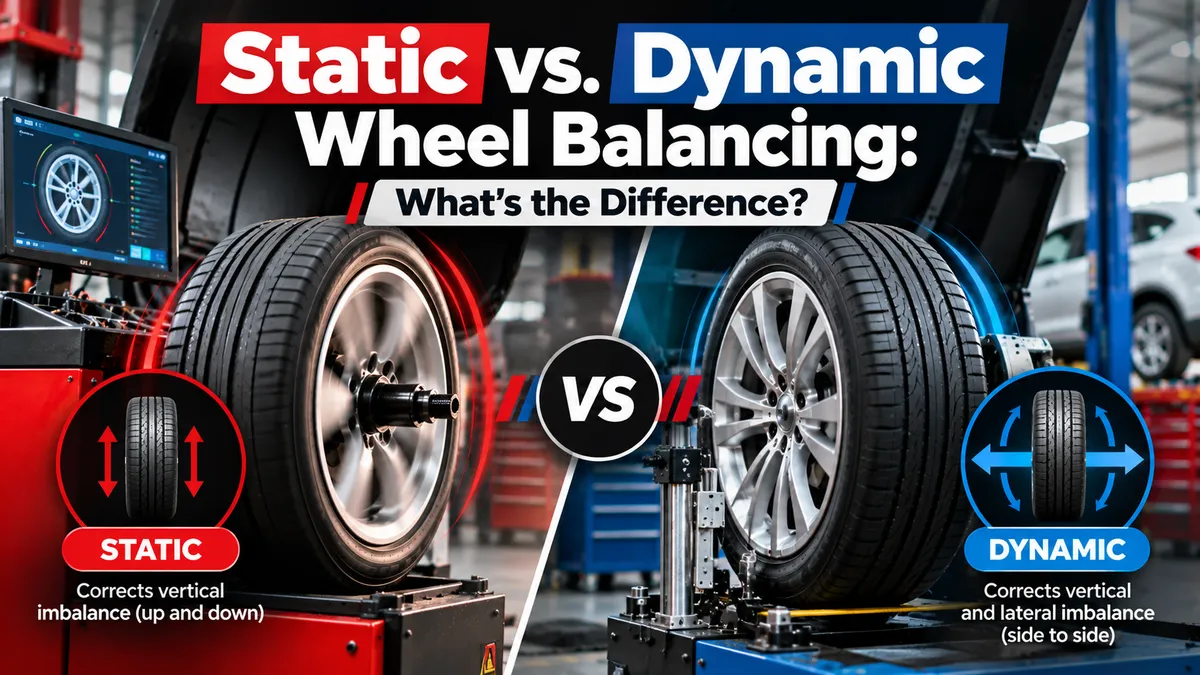
Static wheel balancing corrects weight imbalance in a single plane, helping prevent a wheel from bouncing up and down as it rotates. A technician identifies the heavy spot and adds a counterweight to the opposite side to distribute the weight more evenly.
Static balancing is suitable for narrow wheels, some motorcycle wheels, trailer tires, and certain older vehicles.
Benefits:
Simple balancing process
Effective for single-plane imbalance
Suitable for specific wheel types
Limitations: It is unable to correct side-to-side imbalance, which may cause wobbling in wider wheels.
What Is Dynamic Wheel Balancing?
Dynamic wheel balancing corrects weight imbalance across two planes: the inner and outer sides of the wheel. It helps reduce both vertical movement and side-to-side wobbling. A balancing machine spins the wheel, measures the imbalance, and identifies the correct amount and placement of counterweights.
Dynamic balancing is commonly used for modern passenger cars, SUVs, pickup trucks, and vehicles with wider wheels.
Benefits:
Corrects imbalance across two planes
Helps reduce steering wheel vibration
Improves ride smoothness at higher speeds
Limitations: The main drawbacks of dynamic balancing require suitable equipment and cannot fix vibrations caused by damaged tires, bent rims, or worn suspension components.
How Static vs. Dynamic Wheel Balancing Affects Your Ride
Now, let's take a closer look at how static wheel balancing and dynamic differ in their methods, benefits, and performance.
1. How Each Method Corrects Imbalance
The main difference lies in the kind of imbalance they aim to address. Static balancing focuses on one plane and corrects a heavy spot that can cause the wheel to bounce up and down as it rotates.
Dynamic balancing measures weight distribution across two planes and corrects imbalances that may cause both vertical vibration and side-to-side wobbling. Therefore, dynamic balancing is a better option for wheels that need a more precise correction along both the inner and outer sides.
Despite both methods being beneficial to wheel balance, it is important to choose the correct one according to the wheel design and type of imbalance.
2. The Type of Wheels Each Method Suits
Static balancing is generally the right fit for narrow wheels, lightweight applications, and some classic vehicles. It is also used in certain motorcycle and trailer wheel applications where single-plane correction is sufficient.
Dynamic balancing is normally used for wider wheels, especially modern passenger vehicles, as it takes into account weight shift from inner to outer side.
For example, a narrow wheel may need only a single-plane correction, while a wider car wheel may require balancing across two planes to address wobbling. However, wheel size alone does not determine the right method. The wheel design, vehicle manufacturer's recommendations, and type of imbalance should also be considered.
3. Ride Comfort and Vibration
An unbalanced wheel can create noticeable vibrations, particularly as driving speed increases. Static imbalance may cause a wheel to bounce up and down, while dynamic imbalance can produce side-to-side shaking.
Dynamic balancing can solve both kinds of imbalance, which makes it a common choice when drivers experience steering wheel vibrations or shaking at highway speeds. Fixing these will enable wheels to rotate smoothly and significantly increase the driving comfort overall.
However, vibrations can also result from tire damage, bent wheels, worn suspension components, or alignment issues, so a proper inspection may be necessary.
4. Equipment and Balancing Process
Static balancing uses a suitable balancing stand or machine to identify a wheel's heavy spot and determine where a counterweight is needed. It is quite an easy balancing technique as it focuses on correcting imbalance in a single plane.
Dynamic balancing employs a powered machine that spins the wheel and measures imbalance across two planes. It calculates the required weight amounts and positions for more accurate correction.
No matter the method used, correct mounting of the wheels and accurate placement of weights are key factors for reliable results.
5. Tire Wear and Vehicle Components
Vibrations and tire wear can be caused by incorrect weight distribution of the wheels. Correcting the imbalance helps wheels rotate more smoothly and reduces unnecessary vibration through the steering and suspension systems.
Since dynamic balancing can correct the imbalance in two planes, it is ideal for modern vehicles. As a result, this type of balancing significantly improves ride quality and reduces vibration-related stress on vehicle components.
The USTMA recommends checking tire pressure at least once a month. Keeping tires properly inflated, aligned, and balanced helps maintain tire performance and reduce uneven wear.
6. Cost and Practical Considerations
The cost of wheel balancing varies depending on the service provider, vehicle type, wheel size, and equipment used. Static balancing may be easier to achieve if a single-plane correction is sufficient, while dynamic balancing necessitates equipment that can measure imbalance on two different planes.
The total expense can also vary depending on whether you need one tire balanced or all four. Knowing how much wheel balancing costs can help you plan your tire maintenance budget.
For most modern passenger cars, dynamic balancing is a practical choice. However, the right method depends on the wheel design and the type of imbalance that needs correction.
Which Wheel Balancing Method Should You Choose?
The right method depends on your wheel type, vehicle, and the symptoms you notice while driving. Dynamic wheel balancing is usually used for modern passenger cars and those with wider wheels, on the other hand, static balancing may meet the requirements of narrower wheels and certain older vehicles.
Keeping your tires in good condition will also make your ride smoother and consistent tire performance. If you experience steering wheel vibrations, uneven tread wear, or shaking at higher speeds, have your wheels inspected and explore the available tire options to ensure your tires meet your vehicle's needs.
Signs That Your Wheels May Need Balancing
These are the signs that a balancing of wheels is required:
Steering wheel vibration, particularly at high speed.
Shaking or wobbling felt through the seats or floor.
Uneven tire tread wear.
Vibrations that start happening after a tire or replacement is installed.
The shaking persists after a tire rotation.
In case these problems still exist after balancing, get the technician to check for anything else besides the tires, wheels, or suspension problems, maybe the other issues are there.
Static vs. Dynamic Wheel Balancing Comparison
The following table summarizes the main differences between static and dynamic wheel balancing.
Service | What It Does | When It Is Needed |
|---|---|---|
Correction method | Single-plane | Two-plane |
Main imbalance addressed | Vertical imbalance | Vertical and lateral imbalance |
Equipment | Suitable static balancer or stand | Dynamic wheel balancing machine |
Best suited for | Narrow wheels and specific lightweight applications | Most modern passenger cars and wider wheels |
Vibration correction | Addresses wheel hop caused by imbalance | Addresses wheel hop and side-to-side wobbling |
Weight placement | One correction plane | Inner and outer correction planes |
Typical application | Some classic vehicles and motorcycles | Modern cars, SUVs, and wider wheels |
Choosing the Right Wheel Balancing Method for Optimal Performance
Understanding static vs. dynamic wheel balancing assists you in making informed decisions on your vehicle's maintenance. Static balancing can be done when a single-plane correction is sufficient, but dynamic balancing solves the problem of having imbalance in two different planes and is usually the method used for modern vehicles.
Steering wheel shaking, unusual vibrations, or uneven tire wear are signs you should contact a qualified technician. Choosing the right balancing method can improve ride comfort and help reduce unnecessary tire wear.
At CC Professional Tire, we offer a wide range of quality tires and services to support your vehicle's performance. With expert guidance and support, you can make the right choice for your driving needs. Visit our website to explore our offerings and find the right solutions for your vehicle.
FAQs
1. What is the major difference between static and dynamic wheel balancing?
Static balancing corrects imbalance in one plane, whereas dynamic balancing is used to remove the wheel imbalance problem in two different planes.
2. Is dynamic wheel balancing better than static balancing?
Usually, dynamic wheel balancing is recommended for modern passenger cars because it corrects both single-plane and two-plane imbalance.
3. How do I know if my wheels need balancing?
Steering wheel vibrations, shaking at higher speeds, and uneven tire wear can indicate a wheel imbalance.
4. How often should wheels be balanced?
Wheels should be balanced when installing new tires, after certain tire repairs, or when vibration symptoms appear.
5. Can unbalanced wheels cause uneven tire wear?
Yes, wheel imbalance can contribute to irregular tire wear and affect driving comfort.
6. Where can I get help choosing the right wheel balancing service?
CC Professional Tire can help you explore tire services and find suitable options for your vehicle based on your driving needs.