
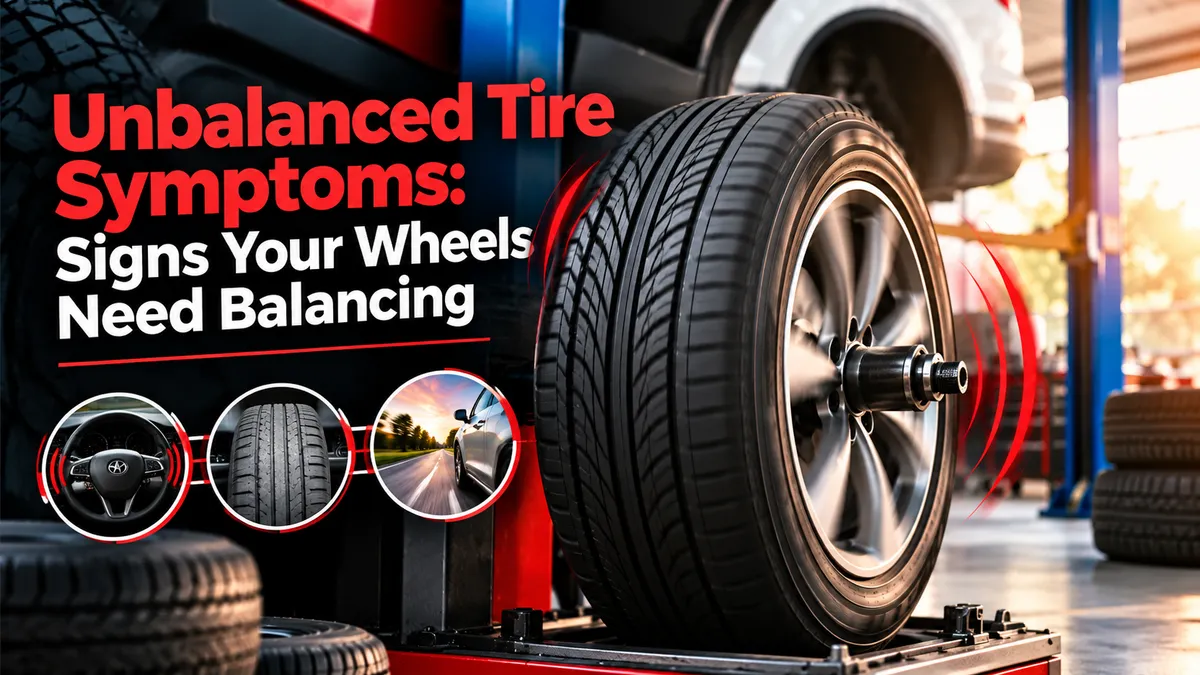
Unbalanced Tire Symptoms: Signs Your Wheels Need Balancing
Unbalanced Tire Symptoms: Signs Your Wheels Need Balancing
Does your steering wheel shake at highway speeds but feel normal when you slow down? Unbalanced tires could be the reason. Uneven weight distribution in your tire and wheel assembly can cause vibrations, reduce the level of comfort while driving, and may wear the tires very rapidly.
If you catch the signs of unbalanced tires early it can help you identify when your wheels need attention. From unusual vibrations to strange tire noises, these warning signs can help you know when to schedule an inspection.
Proper wheel balancing helps maintain a smoother ride and reduces unnecessary tire wear. The global wheel balancing market was estimated at $2.92 billion in 2025 and is projected to reach $3.92 billion by 2030, highlighting the ongoing need for balancing services. Understanding the common symptoms of unbalanced tires can help you recognize when your wheels need inspection and take action before the problem affects your driving comfort.
What Is Tire Balancing?
Tire balancing corrects uneven weight distribution in a tire and wheel assembly, helping the wheels rotate smoothly and reducing vibrations, especially at higher speeds. A technician uses a balancing machine to identify heavier areas and attaches small weights to the wheel rim to even out the distribution.
To maintain a smooth ride, balancing is generally recommended every 6,000 to 8,000 miles or whenever signs of imbalance appear, such as steering wheel vibrations or uneven tire wear.
Wheel balancing is usually performed when new tires are installed, but wheels can also become unbalanced during regular driving. Impacts from potholes, lost balancing weights, and normal tire wear can all contribute to the problem.
Common Unbalanced Tire Symptoms to Watch For
Here are some common unbalanced tire symptoms to watch for and what they may indicate about your wheels.
1. Steering Wheel Vibrations
A shaking steering wheel is one of the most recognizable signs of unbalanced tires. You might initially notice a slight vibration, but it can become more obvious as your speed increases.
Front-wheel imbalance often causes shaking that you feel directly through the steering wheel. If the vibration appears mainly at highway speeds and becomes less noticeable when you slow down, the only option to balance the tires may be considered. However, worn suspension parts, damaged tires, and other mechanical problems can cause similar symptoms.
Getting the issue checked can help prevent further tire wear and keep your vehicle running smoothly. Schedule a professional tire service to identify the cause and get your wheels back in proper condition. Timely maintenance can also help reduce unnecessary repair costs and provide a more comfortable driving experience.
2. Vibrations in the Seat or Floorboard
Not all tire vibrations reach the steering wheel. When the rear wheels are unbalanced, you may feel shaking through the driver's seat, passenger seats, or floorboard.
That vibration will increase its intensity with a higher speed, making it difficult to enjoy a smooth ride on highways. Since rear tire imbalance can affect the entire vehicle, paying attention to where you feel the shaking can help a technician narrow down the cause.
This sensation can make longer drives uncomfortable, even when the steering wheel feels relatively steady. If the vibration continues on smooth roads, have your tires and wheels inspected to identify its source.
3. Uneven Tire Tread Wear
Unbalanced tires may develop irregular tread wear because the wheel does not rotate smoothly. Instead of maintaining consistent contact with the road, the tire may bounce slightly as it spins.
Check your tires regularly for such spots as uneven patterns, scalloped areas, or repeated dips along the tread. These patterns can indicate a balancing issue, although worn suspension components, incorrect tire pressure, and alignment problems can also contribute.
Regular tire inspections can help you catch uneven wear before it gets worse. Proper tire mounting and regular maintenance can help identify tire issues early. If the tread is already badly worn, balancing alone may not restore the tire's condition.
4. Humming, Buzzing, or Thumping Noises
An unusual noise coming from a tire is definitely a symptom to look out for. You might hear a rhythmic thumping, humming, or buzzing sound that becomes louder as the vehicle moves faster.
An unbalanced wheel can contribute to vibration and irregular contact with the road, producing sounds you may not have noticed before. However, uneven tread wear, damaged tires, and worn wheel bearings can create similar noises.
Pay attention to when the sound occurs and whether it changes with speed. With the help of a professional inspection and diagnosis of the issue can help determine whether balancing is necessary or another repair is required.
5. Reduced Driving Comfort and Handling Changes
A vehicle with unbalanced tires may feel less comfortable and stable, especially during highway driving. Constant vibrations can make it difficult to enjoy a smooth ride and may leave you feeling tired after longer journeys.
You may also notice that the vehicle feels less steady as your speed increases. This situation may discomfort passengers and make everyday commutes less enjoyable, particularly when driving on highways for extended periods.
A car pulling to one side often points to alignment, tire pressure, or suspension issues rather than tire imbalance. If you notice changes in handling along with persistent vibrations, have your vehicle inspected to identify the cause and determine the right fix.
6. Faster Wear on Suspension Components
Persistent wheel vibration can place additional stress on parts such as wheel bearings, shocks, and other suspension components. If the imbalance continues, it may contribute to premature wear over time.
Ignoring the problem can also lead to more expensive repairs. Early identification of the tire condition through checking will help you to trace the source of the vibration before it causes further damage. A technician can check whether the issue comes from unbalanced tires or worn suspension parts.
Regular inspections can help maintain ride comfort and keep your vehicle performing as it should.
What Causes Tires to Become Unbalanced?
Multiple factors can interfere with the weight distribution of a tire and wheel assembly.
Damaged by potholes or curbs: A strong impact can damage a tire or wheel or cause a balancing weight to come loose.
Lost wheel weights: The small weights attached to the rim may detach over time, changing the wheel's balance.
New tire installation: Newly mounted tires need balancing to account for weight variations in the tire and wheel.
Uneven tire wear: As tread wears down, the weight distribution can change and create an imbalance.
Wheel or tire damage: A bent rim or damaged tire may produce vibrations that balancing alone cannot correct.
If you notice symptoms after hitting a pothole or replacing your tires, arrange an inspection rather than assuming the issue will disappear on its own.
When Should You Get Your Tires Balanced?
Tire balancing is generally recommended whenever new tires are installed or a tire is removed and remounted during a repair. It may also be needed if balancing weights come loose or your tires develop noticeable vibrations.
You can ask the technician to inspect wheel balance as part of your basic tire maintenance, particularly if you drive frequently on rough roads. Your vehicle manufacturer's recommendations and the condition of your tires can help determine when an inspection is appropriate.
If vibrations persist after balancing, have the tires, wheels, and suspension inspected to identify any underlying issues.
Keep Your Wheels Balanced for a Smoother Drive
Recognizing unbalanced tire symptoms can help you address problems before they affect tire life, driving comfort, or other vehicle components. Although these signs can point to an imbalance, they may also indicate tire damage or other mechanical issues. A professional inspection can help identify the actual cause and determine whether balancing, alignment, or another repair is needed.
Regular tire maintenance and timely balancing can help maintain a smoother ride and extend tire life. CC Professional Tire’s service team can inspect your tires and check for balancing issues to help prevent unnecessary tire wear. If you notice unusual vibrations or changes in your vehicle's performance, schedule an inspection to identify the cause.
FAQs
1. What are the most common symptoms of unbalanced tires?
Common symptoms include steering wheel vibrations, seat shaking, unusual tire noises, and irregular tread wear.
2. Can unbalanced tires cause vibrations at high speeds?
Yes, tire imbalance often causes vibrations that become more noticeable as driving speed increases.
3. Is it safe to drive with unbalanced tires?
Minor imbalance may not require an immediate stop, but prolonged driving can affect tire wear and driving comfort. Severe vibrations need prompt inspection.
4. How often should tires be balanced?
Tires should be balanced when new tires are installed, after certain tire repairs, or whenever symptoms of imbalance appear.
5. Can unbalanced tires cause uneven tread wear?
Yes, imbalance can contribute to irregular tread wear, although alignment, tire pressure, and suspension problems may also be responsible.
6. How long does tire balancing take?
Tire balancing usually takes around 30 to 60 minutes, depending on the vehicle and whether additional issues need attention.
7. Where can I get my tires checked for imbalance?
CC Professional Tire can inspect your tires and help determine whether balancing or another repair is needed.