
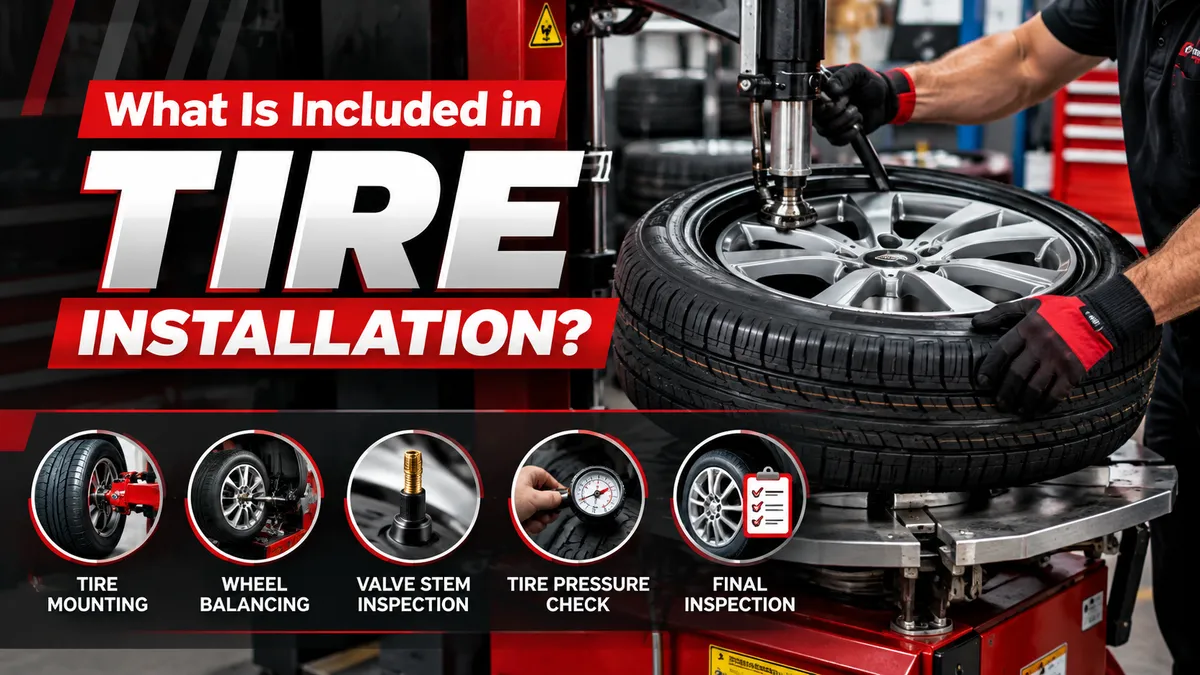
What Is Included in Tire Installation?
What Is Included in Tire Installation?
New tires can make a big difference in how your vehicle performs on the road, but buying the right set is only the first step. Correct installation is crucial, because it affects tire balance, handling, and overall driving comfort. Knowing what happens during the installation process can help you make better decisions when it is time to replace your tires.
Tire installation involves more than just taking off one tire and putting a new one onto your vehicle. The process includes several steps to ensure the tires are mounted correctly, the wheels are balanced, and the pressure is set to the recommended level. Some service packages also cover additional checks and replacements that help prepare your vehicle for the road.
Tire condition is an important part of road safety, and proper installation helps ensure new tires are ready for the road. The 2025 TyreCheck report found that 39.48% of vehicles inspected had tires with tread levels below or close to the legal limit. This highlights the importance of checking tire condition, maintaining proper inflation, and ensuring new tires are installed correctly for safe and reliable driving.
What Does a Standard Tire Installation Include?
A complete tire installation service includes tire removal, mounting new ones onto the wheels, balancing the wheel assemblies, and securely reinstalling them on the vehicle. Proper installation is important for maintaining vehicle stability, reducing vibrations, and helping tires perform as expected.
Here are the main services you can generally expect when having new tires installed.
1. Removing Old Tires
The first step is removing the existing tires from your vehicle. A technician lifts the vehicle using appropriate equipment and removes the wheels. The old tires are then separated from the rims using specialized tire-changing equipment.
During this process, technicians may inspect the wheels for visible damage, corrosion, or other issues that could affect the installation. Also, wheel surfaces might be cleaned to help the new tire seat properly
If the wheels are damaged or the rims have significant corrosion, additional repairs may be needed before installation can continue. These services may cost extra, depending on the shop and the condition of the components.
2. Tire Mounting and Wheel Balancing
Tire mounting involves fitting new tires onto compatible wheels. First the technician verifies that the tire size is correct, ensures directional tread patterns face the correct way, and makes sure the tire bead seals properly against the rim to prevent air leaks.
After mounting, the technician uses a balancing machine to identify uneven weight distribution and adds small wheel weights where needed. Proper balancing helps reduce steering wheel vibrations, improve driving comfort, and minimize uneven tire wear.
Professional tire mounting and balancing helps prepare your tires for reliable road performance. Proper installation and balancing also help your new tires deliver a smoother and more comfortable driving experience.
3. Replacing Valve Stems
The valve stem is the small component used to inflate a tire and maintain its air pressure. Over time, valve stems can deteriorate, crack, or develop leaks, allowing air to escape.
Some tire installation packages include replacement rubber valve stems, especially when installing new tires on compatible wheels. A change of valve stems can help maintain proper inflation and reduce the risk of slow leaks.
However, not every vehicle uses a standard rubber valve stem. For wheels that have tire pressure sensors or specialized valve assemblies may require different parts and procedures. Confirm with the installer whether replacement is included or charged separately.
4. Installing and Securing the Wheels
When the technicians have mounted and balanced the tires, they then reinstall your wheels on the vehicle. The lug nuts or bolts must be tightened according to the vehicle manufacturer's specifications.
Technicians typically use a torque wrench to apply the correct tightening force. This helps secure the wheel properly without leaving the fasteners too loose or overtightening them.
If the tires are not fastened correctly, it can lead to various problems, one being the risk of the wheel falling off. Therefore, a proper installation of the wheels is very important in order to drive safely.
A professional installation should follow the manufacturer's recommended procedures for your vehicle rather than relying on guesswork. If you're planning to replace your tires, our flexible tire financing options can help make the cost more manageable.
5. Checking and Adjusting Tire Pressure
Proper inflation is essential for tire performance, handling, and durability. When installing tires, technicians check the pressure and adjust it to the vehicle manufacturer's recommended levels.
The correct pressure is usually listed on the driver's door-jamb label or in the owner's manual. It may differ between the front and rear tires, depending on the vehicle.
Driving with underinflated tires can increase heat buildup, reduce fuel efficiency, and contribute to premature wear. A tire overinflated can lead to a handling issue and will make tires susceptible to some kinds of road damage.
Tire pressure check by the technicians after installation allows you to have a smooth driving experience. You should continue checking pressure regularly after installation.
6. Resetting the Tire Pressure Monitoring System
Many modern vehicles have a tire pressure monitoring system (TPMS) that alerts the driver when tire pressure becomes too low. Depending on the vehicle, installing new tires may require the system to be checked, reset, or recalibrated.
Some vehicles use sensors inside the wheels, while others use the vehicle's wheel-speed sensors to detect pressure-related changes. The correct procedure depends on the system.
If your vehicle has direct TPMS sensors, the technician may need to check their condition and confirm that they are communicating correctly. Sensor damage or old battery might necessitate the replacement of TPMS sensors.
TPMS service is not automatically included in every installation package, so ask whether sensor checks, relearning, or replacement are covered.
7. Inspecting the Tires and Related Components
In addition to tire mounting, you may also ask the technician to check for other possible issues around the wheel and related parts. Technicians may look for visible tire damage, worn tread, bent rims, or signs of uneven wear.
If old tires display strange wear patterns, further inspection is done to discover possible misalignment or suspension problems. For instance, excessive wear along one edge of a tire can indicate that the wheel alignment or another vehicle component needs attention.
Wheel alignments are typically separate services rather than an automatic part of tire installation. Likewise, suspension repairs and damaged-wheel replacement usually involve additional charges.
Figuring out the problems at an early stage can help you decide which maintenance work is necessary before returning to regular driving.
Additional Services That May Be Included
Tires shops vary in the range of installation services they offer. Some provide basic mounting and balancing, while others include extra services or ongoing benefits.
Service | What it covers |
|---|---|
Old tire disposal | Removal and responsible disposal or recycling of old tires |
Wheel balancing | Correcting uneven weight distribution |
Valve stem replacement | Replacing compatible, worn rubber valve stems |
TPMS service | Checking, resetting, or relearning the pressure monitoring system |
Tire rotation | Moving tires between wheel positions to support even wear |
Flat tire repair | Repairing eligible punctures according to safety guidelines |
Wheel alignment inspection | Checking whether wheel angles may need adjustment |
Road hazard protection | Coverage for certain tire damage, subject to the plan's terms |
Some services, such as tire rotation, flat repairs, and road hazard protection, may be available only through specific packages or optional plans. Before getting the installation done make sure to review the installation quote to understand what is included, what has a separate fee, and whether any ongoing benefits have limitations.
How Long Does Tire Installation Take?
Tire installation time depends on several factors, including:
Number of tires to be installed
Type of vehicle and tire size
Shop workload
TPMS checks or adjustments
Damaged wheels additional repairs
It generally takes one to two hours to mount a typical set of four tires, although additional services may extend the appointment. For expert assistance, explore our tire services to find the right options for your vehicle.
Get Your Tires Installed for Reliable Performance
Selecting the correct tires is crucial but professional installation helps you get the most from them. From mounting and balancing to pressure checks and proper wheel fastening, each step contributes to a safer and smoother driving experience.
A reliable tire service provider can explain the installation process, identify concerns, and help you understand which maintenance services your vehicle needs. Before approving the work, confirm exactly what your package includes so you can make an informed decision and keep your vehicle ready for the road.
FAQs
1. Does tire installation include wheel balancing?
Most tire installation packages include wheel balancing, but the list of services is dependent on the shop. Confirm what's included before booking.
2. How long does tire installation take?
Installing four tires typically takes one to two hours. Additional repairs or TPMS issues may extend the time.
3. Do new tires need to be balanced?
Yes, balancing helps reduce vibrations, improve driving comfort, and promote even tire wear.
4. Is tire alignment part of tire installation?
Wheel alignment is generally a separate service. It may be recommended if your vehicle pulls to one side or your tires show uneven wear.
5. Should valve stems be replaced when installing new tires?
Replacing old or damaged valve stems can help prevent air leaks. Ask your installer whether replacement is included in the package.
6. What should I check after tire installation?
Check tire pressure, look for dashboard warning lights, and pay attention to unusual vibrations or handling changes. Contact your installer if you notice any issues.
7. Where can I find tire installation services?
CC Professional Tire provides tire-related services to meet different vehicle needs. Visit our service page to explore the available options.