
From Tire Shop to Highway: What a Quality Mounting and Balancing Service Should Include
From Tire Shop to Highway: What a Quality Mounting and Balancing Service Should Include
When replacing tires, two basic services are typically done together: tire mounting and wheel balancing. Mounting secures the tire onto the wheel, while balancing corrects uneven weight distribution to help it rotate smoothly. Both are essential for proper installation and a comfortable driving experience.
However, quality service involves more than fitting new tires. Technicians should inspect the wheels, use the right equipment, check tire pressure, and ensure each wheel is securely installed. These steps help reduce vibrations, promote even tire wear, and prepare the vehicle for everyday driving.
Besides, the process of a good quality tire installation also includes checking inflation, as incorrect tire pressure can affect handling, tire wear, and overall performance. A 2025 survey by the U.S. Tire Manufacturers Association found that 45% of surveyed U.S. drivers did not know where to find their vehicle’s recommended tire pressure. This highlights the importance of including a tire pressure check in a quality mounting and balancing service.
What Should a Quality Tire Mounting and Balancing Service Include?
A reliable tire shop follows a clear process from the initial inspection to the final safety check. Quality tire mounting and balancing services help ensure each tire fits correctly, maintains proper pressure, and rotates smoothly for a safer, more comfortable driving experience.
1. Tire and Wheel Inspection
Before mounting begins, technicians need to inspect tires and wheels visually for any sign of damage. These may include cracks, bends, corrosion, worn valve stems, and damaged beads, which can all impact the quality of the installation.
In addition, the technician should check the wheel to ensure it is compatible with the replacement tire. It is by following the proper tire size, specifications, and fitment that one can avoid an incorrect tire installation. If a wheel is damaged or a tire has a defect, the technician should explain the issue before proceeding rather than assuming balancing will solve it.
2. Careful Tire Mounting
Mounting is the process of taking away the old tire and fitting the replacement onto the wheel using specialized equipment. A quality service uses suitable mounting tools and techniques to avoid damaging the tire bead, wheel finish, or pressure monitoring components. Professional tire mounting services help ensure the tire is installed correctly and ready for balancing.
The technician should also apply appropriate bead lubricant and ensure the tire sits evenly against the wheel. If the bead is not perfectly seated, air leak or shaking of the vehicle could occur even when the wheel has been balanced properly. Professional mounting is especially important because improper tire installation and inflation can create serious safety risks.
3. Accurate Wheel Balancing
Once the tire is mounted, the complete wheel-and-tire assembly should be balanced. Small differences in weight can cause the wheel to vibrate as it rotates, particularly at highway speeds.
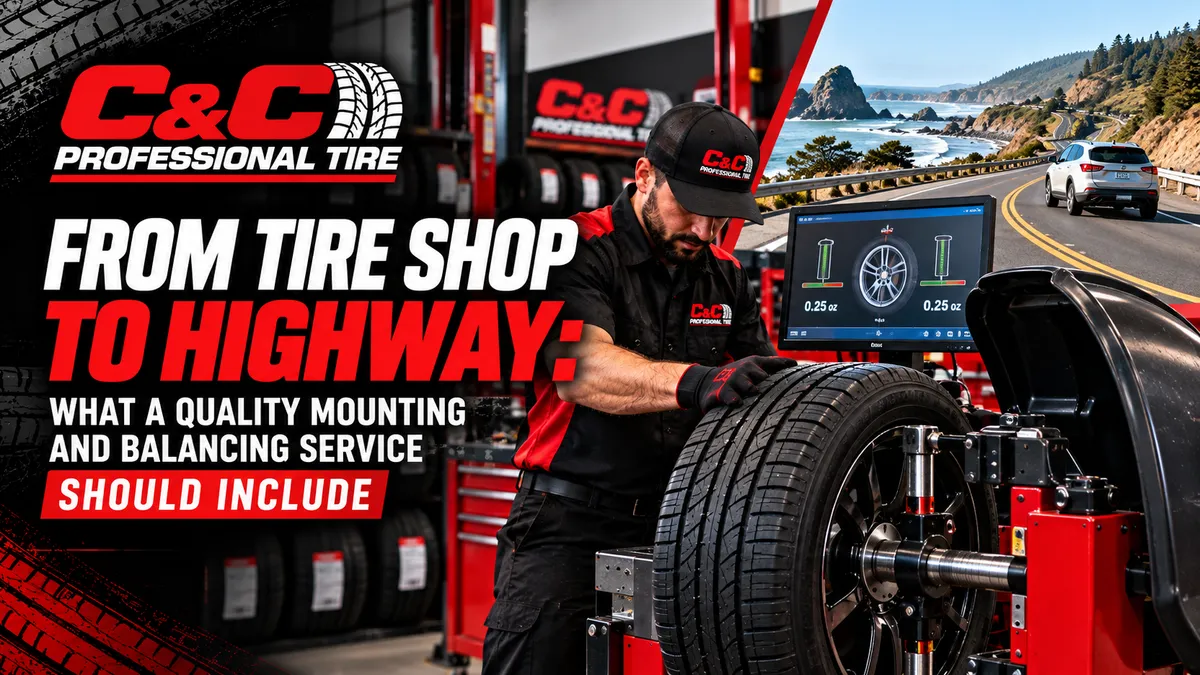
During the process, a technician places the assembly on a balancing machine that measures weight distribution. Small wheel weights are then attached at specific points to correct the imbalance.
The balance of the assembly will be checked again to confirm the correction. Some vehicles or persistent vibration issues may require more advanced testing, such as road force balancing, which measures how the tire and wheel respond under simulated road pressure. The right method depends on your vehicle, tire and the symptoms.
4. Correct Tire Pressure and Valve Checks
A quality mounting and balancing service will be achieved through proper inflation. After tire mounting, the technician should pump each tire into the vehicle manufacturer's recommended pressure, usually listed on the driver's door-jamb label or in the owner's manual.
Leakages can also be detected by examining the valve stem and seal. Vehicles with a tire pressure monitoring system (TPMS) require extra care to protect sensors during mounting. In case of any indication or warning, the shop should check whether the sensor needs attention.
Temperature changes can affect tire pressure by approximately 1 PSI for every 10°F change. Checking tire pressure after installation and periodically as temperatures change helps maintain proper inflation and tire performance.
5. Secure Wheel Installation
Once balancing is done, the wheel needs to be properly put back on the vehicle. Technicians should check the wheel mounting surfaces, position the wheel correctly, and tighten the lug nuts according to the manufacturer's specified torque.
Proper torque matters because overtightening and undertightening can both cause problems. A major advantage of using a calibrated torque wrench helps ensure the fasteners are tightened consistently rather than relying solely on an impact wrench.
The technician should also confirm that the wheel sits flush against the hub and that no obvious installation issues remain before returning the vehicle to the customer.
6. A Final Inspection Before the Vehicle Leaves
A quality service must end with a final check not just with the completion of mounting and balancing. Technicians will also check whether the tire pressure is proper, wheels are properly tightened, and the overall quality of the installed tires is as it was expected.
They should also explain any concerns discovered during the service. If the vehicle has existing vibrations, unusual tire noise, uneven tread wear, or a steering problem, the shop should clarify whether further inspection is needed. Understanding what different tire noises may mean can also help drivers recognize when their tires need attention.
This final step helps identify issues that a balancing machine alone cannot resolve, such as a bent wheel, tire defect, worn suspension component, or wheel alignment problem.
Why Mounting and Balancing Work Together
Mounting and balancing solve different problems, but both are necessary when installing new tires.
Service | Main purpose |
|---|---|
Tire mounting | Fits the tire securely onto the wheel |
Wheel balancing | Corrects uneven weight distribution |
Tire inflation | Maintains the recommended air pressure |
Wheel installation | Secures the wheel to the vehicle |
Final inspection | Checks installation quality and identifies concerns |
Skipping either mounting or balancing can affect driving comfort and tire performance. However, balancing does not correct every wheel or tire problem, and it cannot replace wheel alignment when the steering and suspension angles need adjustment.
Signs Your Tires May Need Another Balance Check
Even after professional installation, your tires may need attention if their balance changes or damage develops. Watch for these common signs:
Steering wheel shaking at certain speeds.
Vibrations felt through the seats or floor.
Uneven or irregular tread wear.
New vibrations after hitting a pothole or curb.
A missing wheel weight or persistent tire-related noise.
However, these symptoms are not always pointing towards the imbalance problem. A technician should inspect the tire, wheel, and related components to identify the actual cause before recommending repairs.
Choosing a Tire Shop for Reliable Results
A good quality tire repair shop offers more than a quick installation. Look for trained technicians, suitable mounting and balancing equipment, careful handling of wheels, and a clear explanation of the services included in the price.
It may be wise to ask for confirmation in detail that the quote includes mounting, balancing, valve or TPMS servicing where needed, pressure checks, and wheel installation. Confirm whether additional charges apply for specialty wheels, replacement parts, or advanced balancing procedures.
Choosing a trusted tire repair shop that prioritizes quality workmanship and clear communication can make the process easier. A dependable team should explain any recommended repairs and help you understand what your vehicle needs before additional work begins.
From the Tire Shop to the Highway
The right tire mounting and balancing should help you get your vehicle ready for an enjoyable driving experience. Proper installation, balanced wheels, and correct tire pressure all contribute to better handling and consistent tire performance.
Before heading onto the highway, make sure your tires are properly installed and the wheels are secure. Doing that can significantly minimize the chances of vibrations and support a more comfortable drive at higher speeds.
A reliable tire shop offers quality products and services to keep your vehicle ready for everyday driving and highway trips. Expert guidance can also help you make the right decisions about tire installation, balancing, and maintenance for a smoother drive.
Frequently Asked Questions
1. What does a tire mounting and balancing service include?
It typically includes tire installation, wheel balancing, tire pressure checks, and secure wheel installation.
2. Why is wheel balancing important after mounting new tires?
Balancing helps distribute weight evenly around the wheel, reducing vibrations and promoting even tire wear.
3. How do I know if my tires need balancing?
Common signs include steering wheel vibrations, unusual tire noise, and uneven tread wear.
4. Should tire pressure be checked after installation?
Yes. Proper tire pressure supports handling, tire life, and overall driving safety.
5. Can unbalanced tires affect highway driving?
Yes. Unbalanced tires can cause vibrations that become more noticeable at higher speeds, affecting driving comfort.
6. How long does tire mounting and balancing take?
It often takes around 45 minutes to an hour for a set of four tires, depending on the vehicle and shop workload.
7. What should I look for in a quality tire shop?
Look for trained technicians, proper equipment, and careful installation to ensure your tires are mounted and balanced correctly.